
RESPONSIBLE TRAVEL | MALAWI | FISHERMAN’S REST
By the Fisherman’s Rest team
If you searched ‘volunteer travel Malawi’ to find this page, you’re in the right place. But we want to be honest with you about something before we go any further.
What happens at Fisherman’s Rest isn’t volunteering in the way most people picture it. You’re not expected to fix anything, that’s long been a misconception attached to volunteering.
You’re being welcomed into something that’s already working, it’s run by local people, it’s already changing the lives of people in rural Malawi, and you’re walking alongside our ongoing work for a week or two (or month or three). We really emphasise this, it matters to us, and once you understand it, we think it’ll matter to you too.
A project day here is a real day. You’ll get grubby. You’ll be handed a spanner and shown what to do with it. You’ll sit on a mat under a tree with fifty enthusiastic children and realise fairly quickly that you should have prepared more activities. You’ll drink tea with a family and stay far longer than planned because the conversation is too good to leave. By the end of your time in Malawi, you’ll be tired and emotional in the best way possible and probably already planning how you’re going to come back.
Here’s what a day out on projects at Fisherman’s Rest looks like.
We think the word volunteering carries a lot of baggage. It conjures images of gap year students painting school walls, only for the organisation to re-paint them white ready for the next group (yes we’ve seen this happen) or short-term projects that begin and never really finish, without much lasting connection or impact to the community, or a dynamic where the visitor/volunteer is positioned as the one doing the giving and ‘changing’ things.
The volunteer travel model has attracted well-deserved criticism, and rightly so.
Fisherman’s Rest has been working in rural Malawi since 1990. The projects you’ll be part of – the water programme, the school libraries, the community centre, the tree planting, the stove building – are all long-term programmes that run all year round, with or without international volunteers and visitors. When you join them, you’re not the focus. The community is. You’re there to contribute where you can, to learn, and to spend time with people doing extraordinary work in ordinary conditions. It’s a partnership, an expereince where everyone benefits and works towards a longterm common goal (Dependent on each project).
That’s what makes community projects work, and changes your life in that moment, more than the people you’ll meet. When you’re searching for volunteer travel in Malawi, if that’s exactly what you’re after, we’re worth looking into.
Days at Fisherman’s Rest have a natural flow. Mornings are early, typically spent in schools. You’ll start your day with serving phala (porridge) or out repairing water points or building Changu stoves.
The FR team shapes each day around your group — your ages, interests and the projects that are running at that time. Some projects, like the Madzi Alipo water pump repairs, can absorb a full day if you want to go deep.
Others combine naturally. A morning on conservation work followed by an afternoon helping a family build a stove is a very typical and very good day.
You won’t be dropped in and left to manage. The FR staff team are alongside you throughout, guiding, translating, making introductions and keeping you fully informed.
Meals tend to be back at the Lodge, to give you time to talk, hydrate, change a shirt, collect materials and prep for the next part of your day.
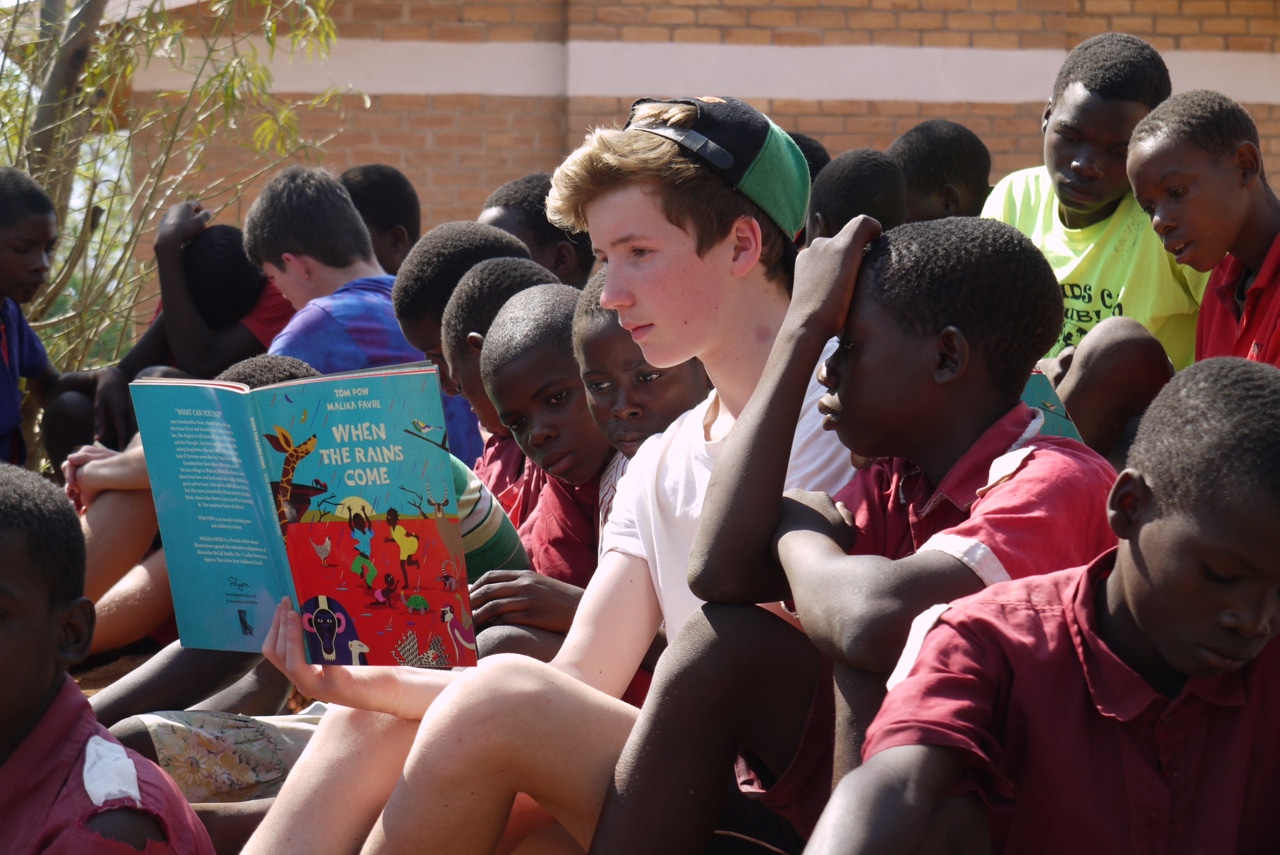
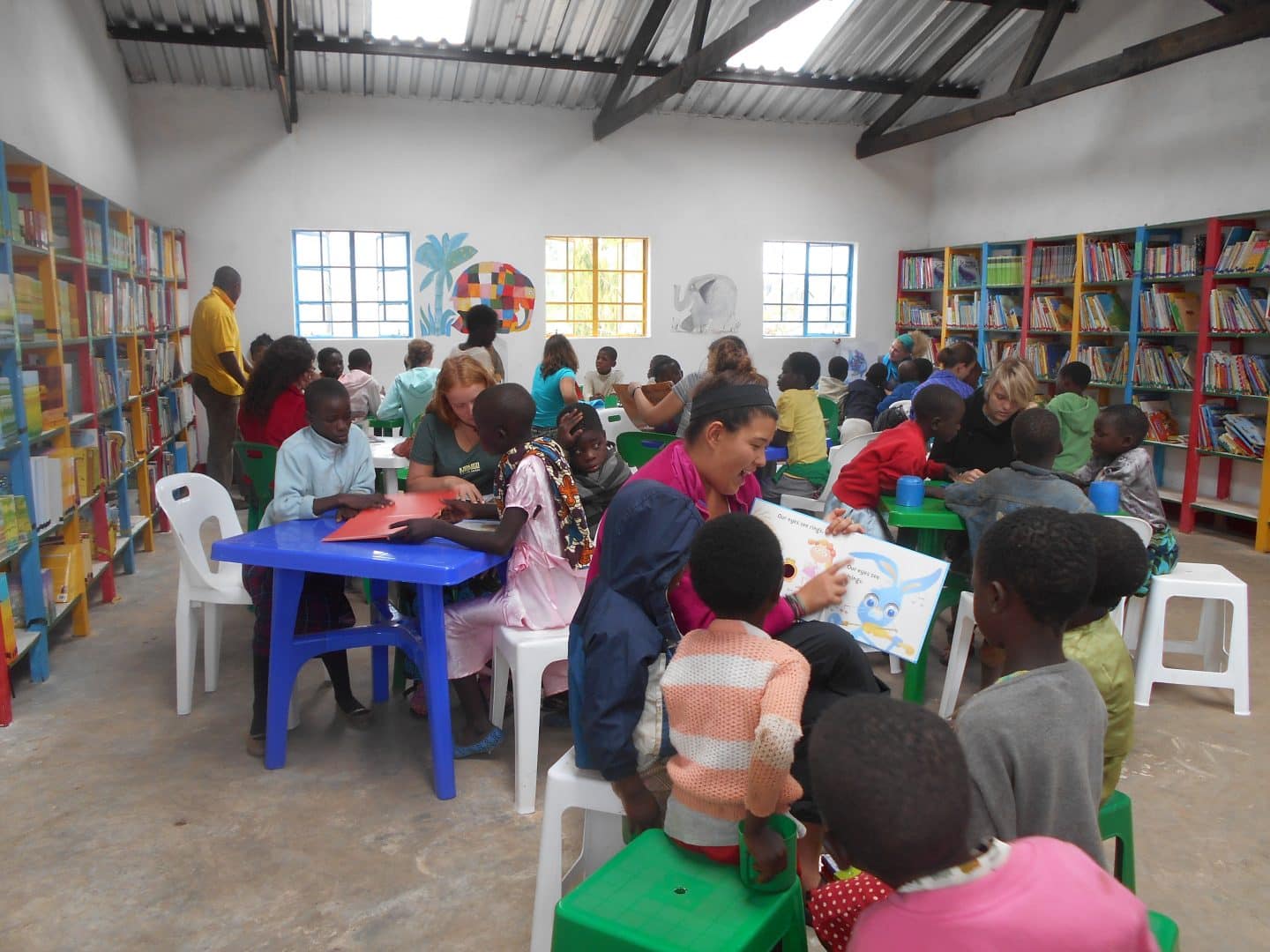
Fisherman’s Rest has built six libraries across six primary schools in the area. These are working spaces, not showpieces, designed to support the Malawian education system with books, resources and a programme of activities that runs throughout the year.
When you join a library morning, you’ll be working with between 50 and 100 children, split into smaller groups. Some will be inside the library. Others will be on mats under trees outside because the space fills up fast and nobody minds the shade. The age range is wide — primary schools in Malawi enrol children from five to fifteen, with roughly a three-year spread in any year group, since children can only move up by passing their exams.
The aim is to give children time to practise their spoken and written English alongside creative learning they wouldn’t otherwise get. Activities include reading aloud, storytelling, crafts, board games and card games. Two 45-minute slots is a reasonable starting point if you want to prepare something, though the team will help you adjust as the morning unfolds. Football, songs and group games always go down well at the end.
The libraries hold a mix of Malawian books and familiar UK titles — The Gruffalo, The Hungry Caterpillar, Handa’s Surprise. Some of the children know these stories by heart. Don’t be surprised if they start reciting along before you’ve finished the first page.
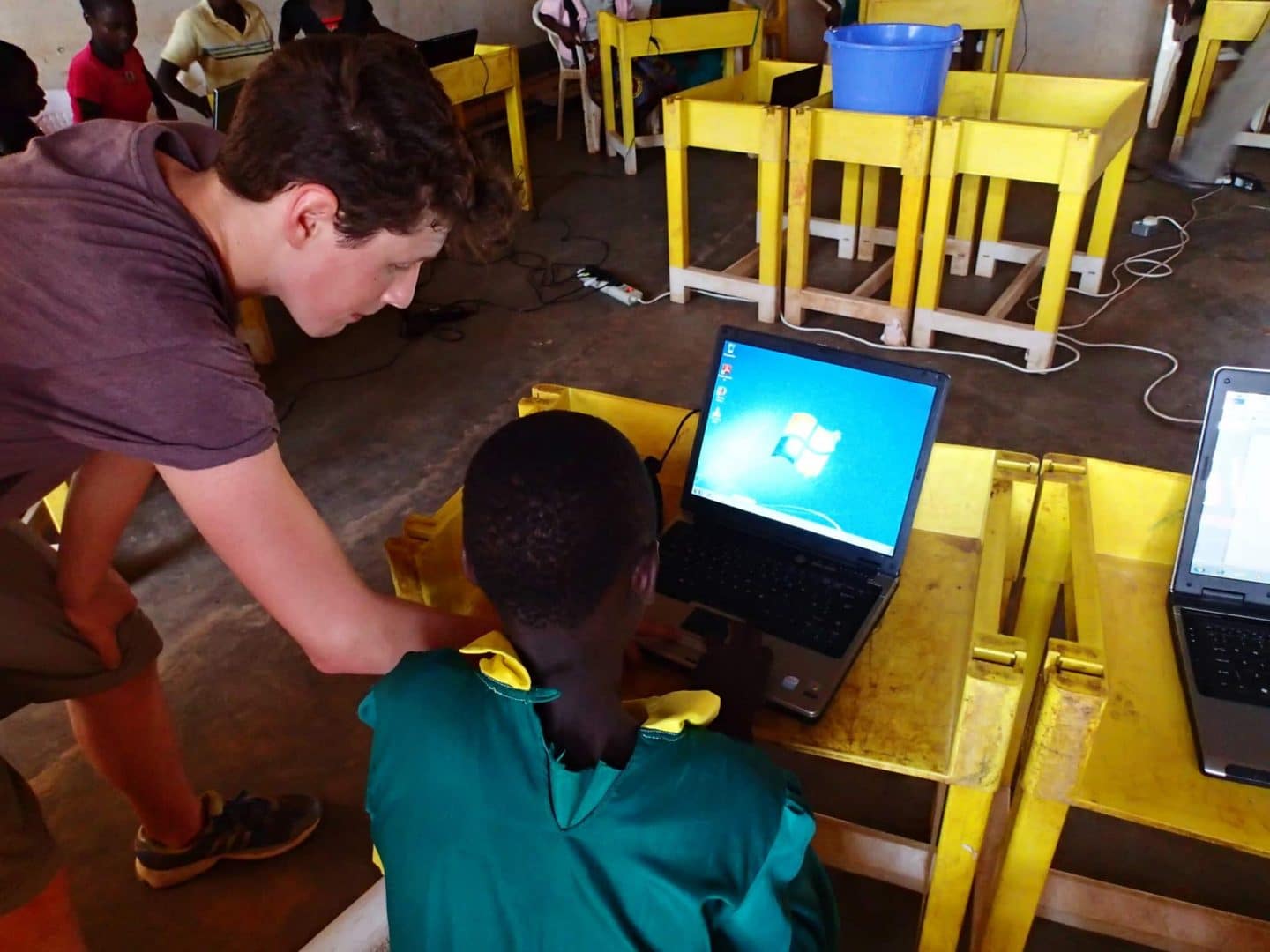
Tilitonse is one of those places that’s difficult to describe until you’ve been inside it. Run by Shereen, the centre is a busy, joyful space where over 80 children come through every day for porridge, learning and play. During the day there are also adult literacy lessons and computer lessons with the local secondary school.
Depending on what’s running when you visit, you might join Shereen and Virginia teaching adults to read and write in both English and Chichewa. You might be running games on the football pitch or doing crafts with children who are, without exception, very pleased you’re there. The energy at Tilitonse is something everyone loves and you’re bound to want to head there more than once!

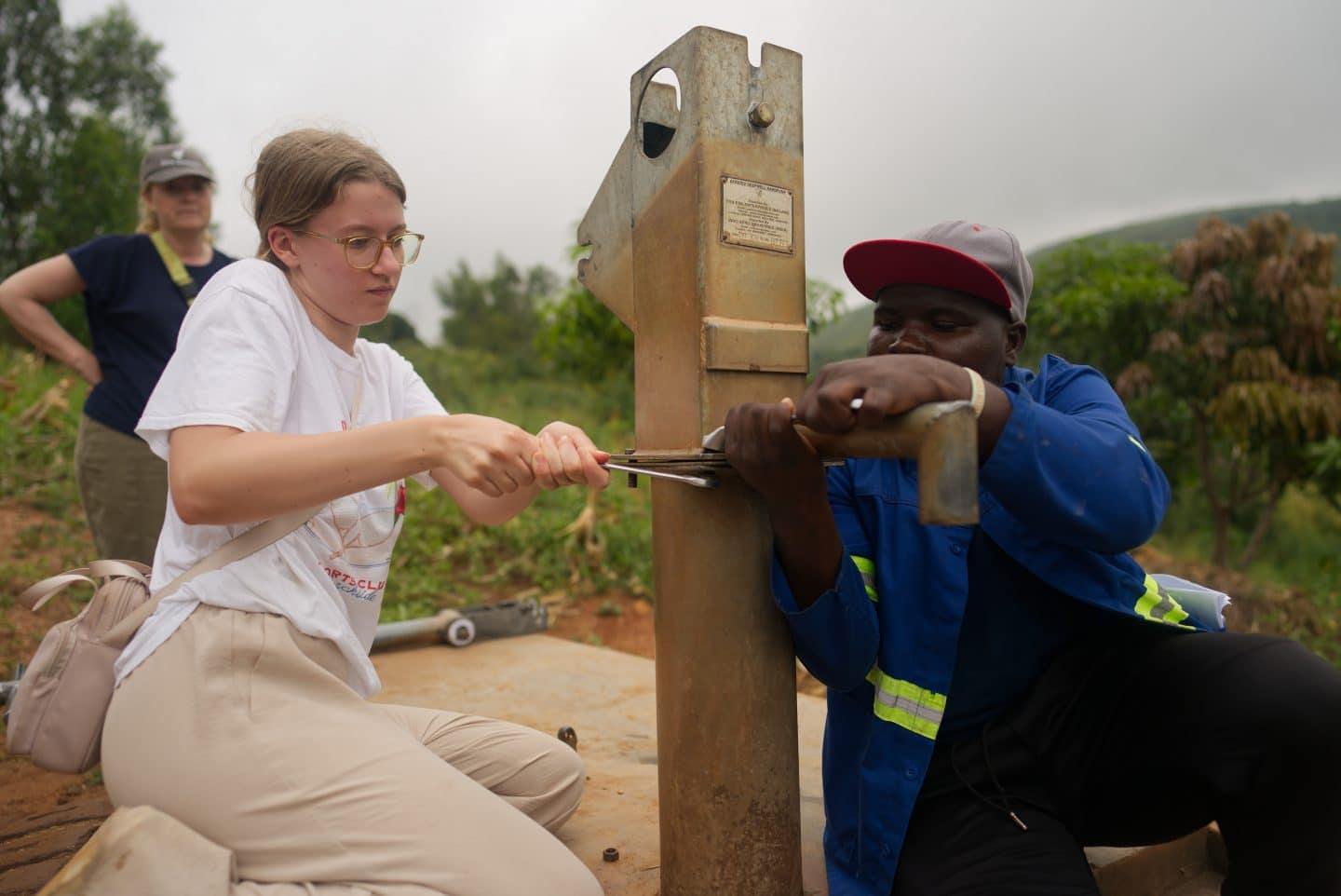
Madzi Alipo means ‘water is here’ in Chichewa, which tells you exactly what this programme is about. The team travels out into communities to log, assess, sample and repair Afridev handpumps — the primary source of clean water for many rural households and schools across Blantyre Rural.
This can be a full day if you want it to be. You’ll be part of the team in every practical sense, passing parts, helping with data collection, talking to the community to understand what it means for a family when a pump that’s been out for weeks finally works again. It’s comprehensive and an effective programme, and it’s some of the most grounding work you’ll do on the trip.
Changu Changu Moto translates roughly as ‘quick quick fire’, and these simple, well-designed cook stoves do exactly that. Built inside family kitchens from 100% locally sourced materials, they use significantly less firewood than an open fire, produce less smoke and save women a serious amount of time collecting fuel.
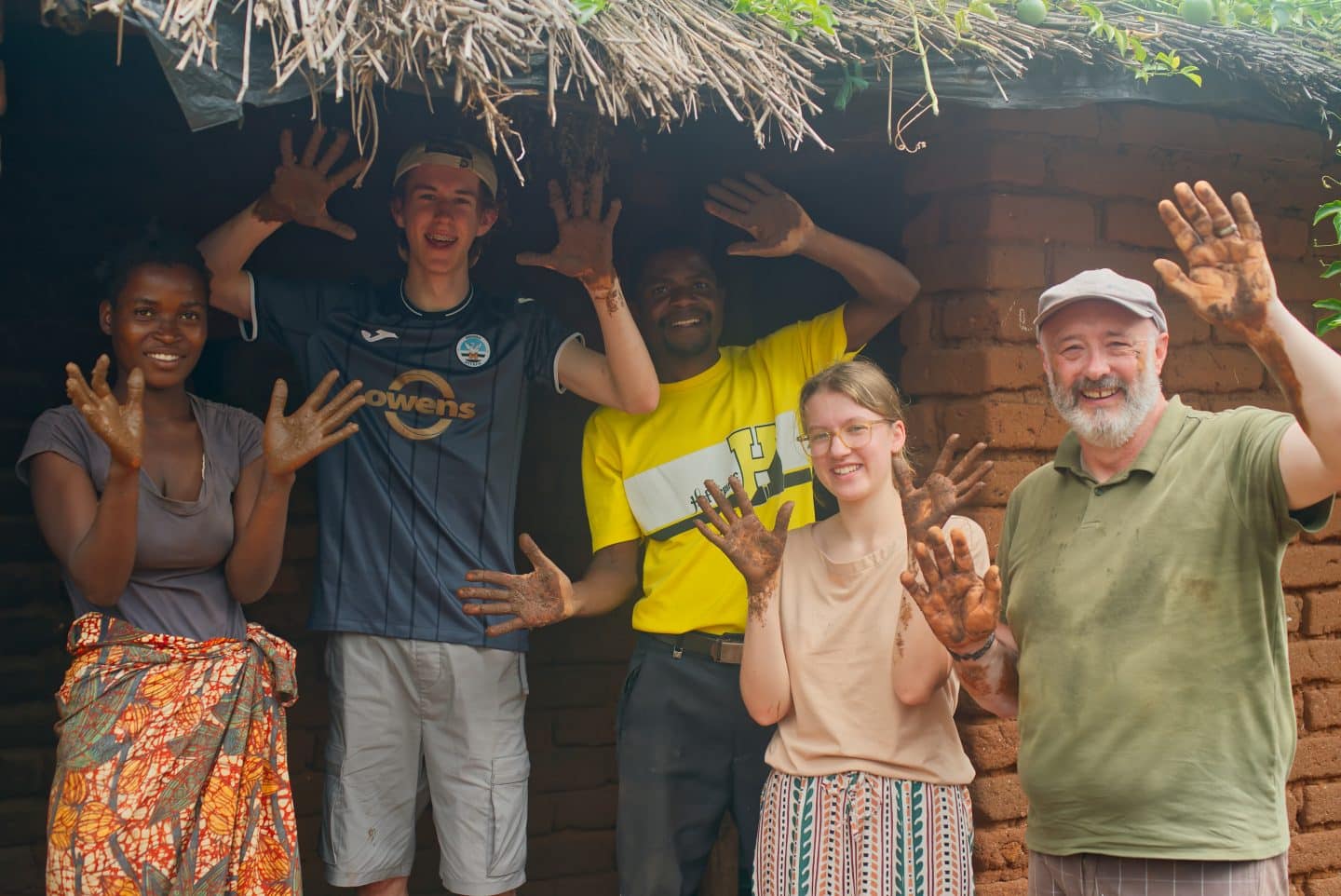
You’ll head out to a family home, help build the stove alongside the family and learn how to use it properly. Somewhere in the middle of this, you will end up drinking tea, meeting children who peek around the door at you, and losing track of the time entirely. The hospitality in those homes is something you won’t forget.
Led by Augustine and the conservation team, the tree planting programme spans Mbame’s own forest and nature reserve into community planting work that is slowly but visibly changing the landscape of rural Malawi. An afternoon on the tree project might involve nursery maintenance, heading into communities to check on tree farmers, or protected forests, weeding, building protective fences or joining a community meeting about land and soil health. For those staying longer, there are opportunities to get involved in seed gathering, grafting and planting.
BRAVE is Fisherman’s Rest’s programme for girls and boys in Standard 6, working across 12 schools in the area. Run by Esnat and Mark, the sessions cover topics that matter enormously at that age — self-worth, health, relationships and future possibilities. It’s not a programme you drop in and out of, and not every session is open for visitors to observe, but where timing and context work, being present for a BRAVE session is one where you realise how far life is from your norm, yet how connected we all are by the passage of time.
One of the most interesting and insightful things you can do during a stay at Fisherman’s Rest is spend an afternoon at the home of a member of the FR team.
You’ll meet their family, drink local tea, walk around their land, try to use a Khasu, collect water, bake local cake and have the kind of conversation about daily life, work, food, education and ambition that simply doesn’t happen on a day trip. It’s unhurried, generous and completely honest. If you get the opportunity, take it.

There’s a place for beautiful travel. A vehicle, a lodge, a guided walk, back for exquisite dinner. It’s unbelievable, but it’s only one side of travelling and one side of the country you’re visiting.
Do both, wherever you go.
What happens on a project day at Fisherman’s Rest is different because you are not observing, you are part of something, you’re part of everyday life in Malawi and we promise, it will teach you and challenge you, more than you think.
The water pump you repair will keep serving the community after you leave. The stove will keep cooking meals. The trees will keep growing and bring wealth to the family whose land they’re rooted on. The children will keep coming back to the library, gaining knowledge to get them to secondary and beyond. You were part of a day in a life that carries on, and that’s a different feeling from luxury.
Families who come for a week always say they wish they’d stayed for two. Parents say it’s the trip that shifted something in their teenagers that nothing else had managed to reach. Teenagers who first visit with their families sometimes come back as long-term volunteers.
We’re not going to tell you it will change your life. But we will say that most people who spend time on projects at Fisherman’s Rest go home with bigger hearts and wider minds.
Everyone, genuinely. Fisherman’s Rest has welcomed families with children as young as two, school groups of over 30, church teams, solo travellers, university researchers, gap year students and people who simply wanted to do something different with two weeks of annual leave.
You don’t need particular skills or a high level of fitness for most project activities. You do need to be prepared to walk, some project sites involve rough paths and the Malawi sun is not to be underestimated, but the team will always shape the day around who is there and what people can genuinely contribute.
None at all. The FR team guides everything and shapes each day around who you are and what you can genuinely contribute. The one thing that helps is turning up with an open mind and a willingness to have a go.
Yes. Fisherman’s Rest has hosted children as young as two on project days. For primary school age and upwards, the activities are genuinely engaging. The team tailors involvement to age and energy levels.
A typical day includes a morning project and an afternoon project, with lunch back at the lodge in between. Some programmes, like the Madzi Alipo water repairs, can fill a full day if you want to go deeper into it.
Yes. You are not arriving to run a programme or fix a problem. You are walking alongside work that was happening before you got here and will carry on after you leave. That changes the dynamic entirely, for you and for the communities you spend time with.
Every person who participates in project days has consented to it and genuinely wants to share that part of their life with you. Nothing is arranged for show. The relationships behind each project have been built over decades, and you are welcomed into them as a friend, not a tourist.
If you want to understand what a stay at Fisherman’s Rest would look like for your group, the best next step is a conversation. We’ll talk through what you’re hoping to get from the trip, and how we can put the right days together for you.
To keep up to date on all Fisherman’s Rest news, including new trips, project work and good news stories, join our mailing list.
When booking a trip with us, you create an account. The login details you created when doing so will gain you access to our Trip Portal. If you still have issues gaining access, head over to the Login page and click Lost Your Password?