
If you’re planning a trip to Malawi, the first question you’ll ask and probably the most important one is, “when do I go?”. The short answer is the dry season: May to October. But the longer answer is more nuanced, and more useful, than most travel guides explain.
Because the best time to visit Malawi is about what you can do, where you can go, and what the country feels like. Believe it or not May is VERY different to October. From the lodge at Fisherman’s Rest in Mbame, we’ve watched Malawi move through its seasons for over 20 years. This is what you can expect at every time of year.
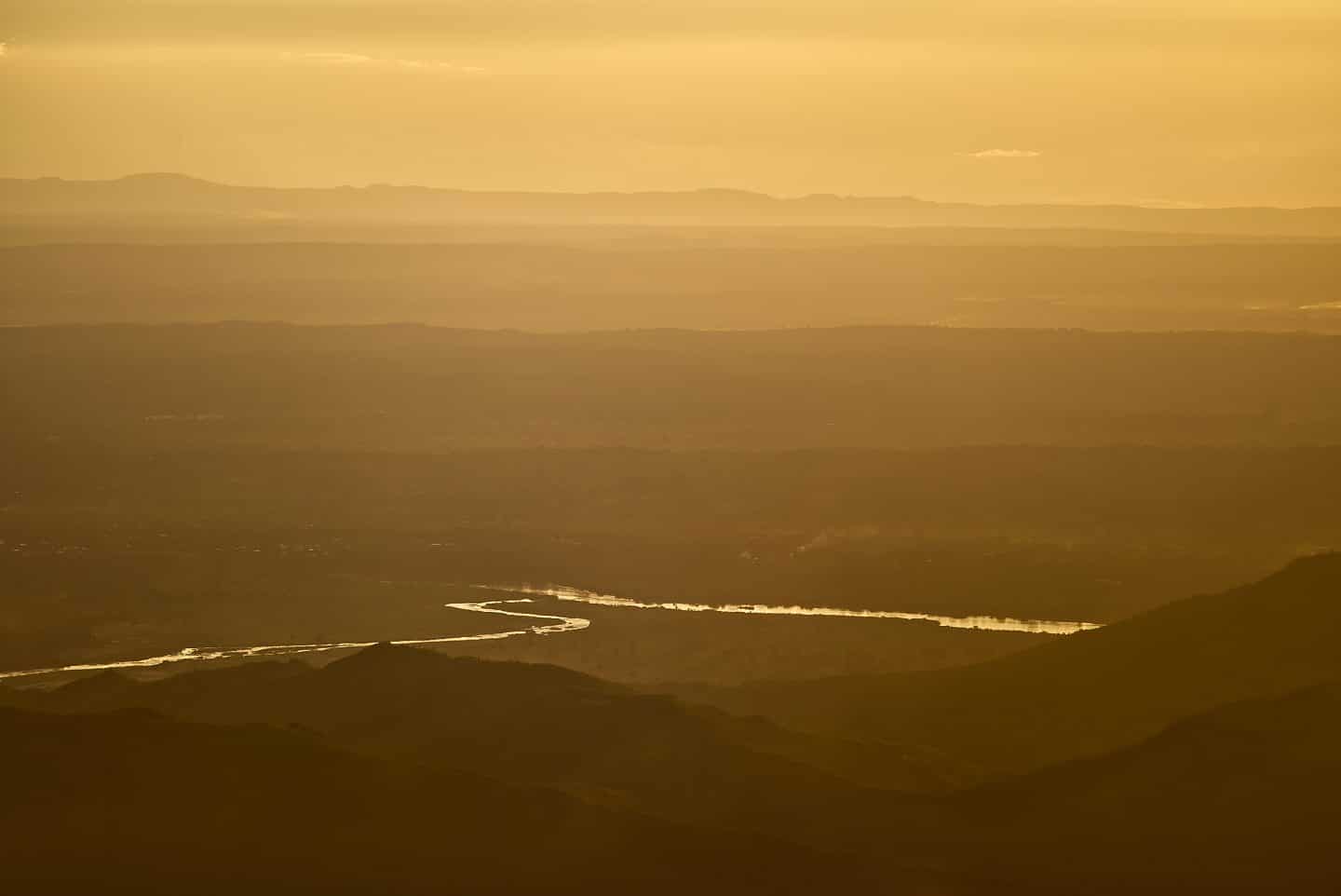
Malawi has two clearly defined seasons, and understanding the difference between them will shape your entire trip.
The wet season runs from November through to April. Rain arrives heavily, it’s spectacular, with fierce electrical storms rolling over the escarpment. You can clearly see them approaching Fisherman’s Rest Lodge. With the rains, the landscape transforms into a vivid and startlingly green. Roads into rural areas can become impassable, we often have to access projects on foot. Some lodges close, especially during January. Humidity rises. It’s not the time most travellers choose to visit, though birding enthusiasts will tell you it’s an extraordinary time to visit. We agree, but you have to arrive prepared for the rain.
The dry season runs from May through to October. The rains stop, the skies clear, the paths firm up, and Malawi opens up for travel. This is when most visitors come and when everything you’ve come to see and do becomes fully accessible. However we do get chiperoni from May to July – mists that bring the temperatures down and can cover the mountain in wet misty air for days.
Which brings us to mention, within the dry season, there’s a further distinction worth making: the cool dry months, green countryside with lower temperatures and big mists (May through August) and the warm dry months (September through October) dry earth, less green, but it’s peak Safari season. Both are excellent for travel, given the slight variance in weather, temperature and vegetation, they feel quite different. For families with children or first-time visitors to Africa, the cooler months tend to be the most comfortable.
Here’s a quick reference guide to what you can expect across the dry season.
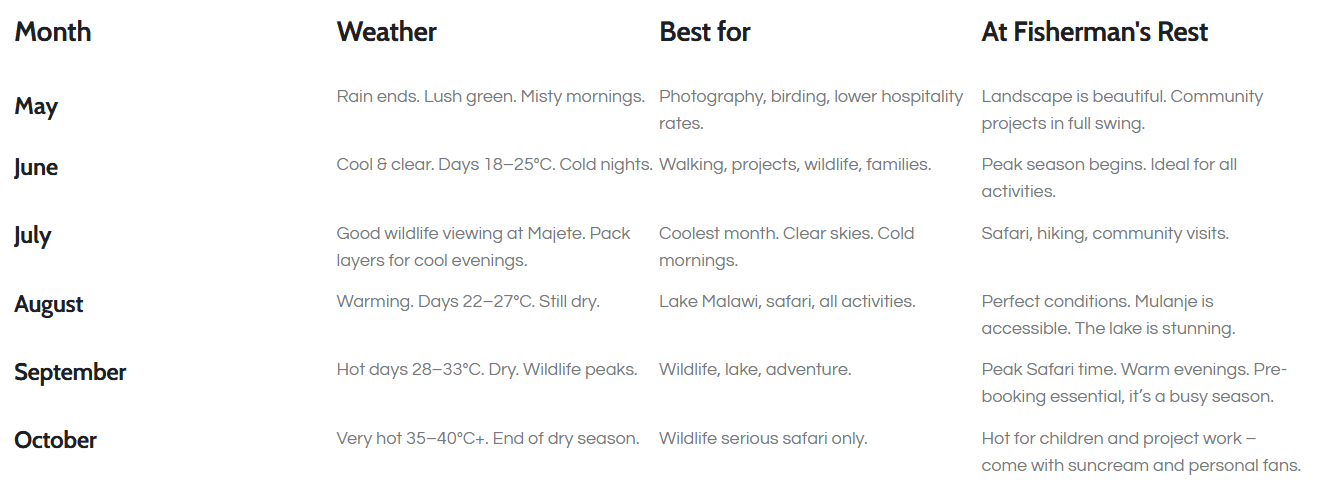
Of all the months in the Malawi calendar, June through to September is where most of our guests find the balance they’re looking for – good weather, great wildlife, comfortable temperatures, and fully accessible roads and communities.
By June, the last of the rains have gone. The land is still carrying some of the wet season’s green, the forested hillsides around Mbame are still lush, and access to projects easy. Paths are solid, and the air is clear. On a June morning, the view from the lodge across the valley is as good as it gets (if not better than) anywhere in Africa.
As July moves into August, the landscape begins to dry and turn golden. The vegetation thins slightly, which is actually good news for wildlife viewing. The animals become easier to spot as the bush opens up, and as water dries up water holes become an essential daily stop. By October, the landscape takes on a drier, more dramatic character, with dust rising from the tracks and sunsets that’ll stop you mid-sentence.
Majete Wildlife Reserve, 45 minutes from Fisherman’s Rest, comes into its own during the dry season. As water sources deep in the reserve dry up, animals concentrate around the rivers and permanent waterholes. Elephant sightings become almost guaranteed. Lions are regularly seen, and the likelihood of seeing giraffes, wild dogs and cheetah becomes possible. The Big Five are all present and unlike larger, more famous parks and countries, Majete rarely feels crowded.
June is particularly good for elephants, the dry season starts and the elephants are active, clustering in large numbers around water. July and August bring the clearest skies and excellent game viewing. By September, hippos, crocodiles and water birds cluster visibly at the river edges, making for some extraordinary game drive moments.
For families travelling with children, or anyone who struggles with serious heat, June to August is the most comfortable time to be in Malawi. Days run between 18°C and 27°C. Warm enough to be outside all day, cool enough to work and walk without exhaustion.
Evenings cool sharply (literally pack a fleece and a light jacket, July nights around the fire can drop to 10°C or below, and in the highlands even cooler), but we think that it only adds to the experience.
September warms up considerably. It’s still dry and the wildlife is excellent, but daytime temperatures in the low-to-mid thirties mean early starts are essential and afternoon rests become a routine part of the day.
This matters at Fisherman’s Rest in a way it doesn’t at most lodges. The dry season is when project work is at its most accessible. Roads into rural villages are open. The Madzi Alipo water team is out in the field. Tilitonse Community Centre is running at full pace (especially when school’s out!). The tree nurseries and conservation sites are in full training mode, planting happens in January…
Visiting in June or July you can expect to spend time in communities alongside the project team every day, and that, for most people, is the memory of the trip they carry home.
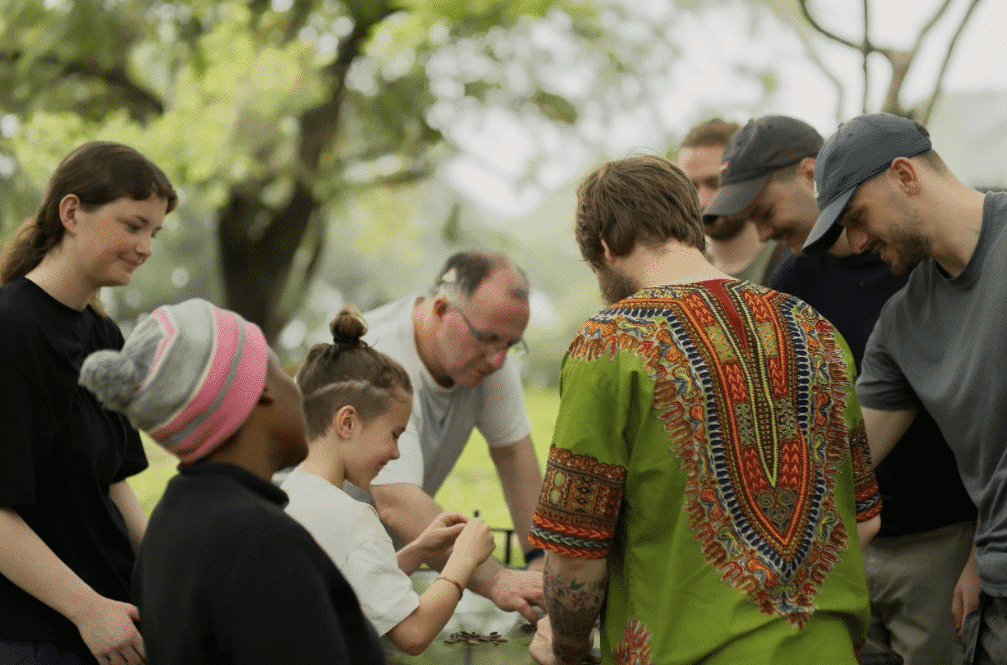
The heart of a stay at Fisherman’s Rest is time spent with the communities and projects around Mbame. In the dry season, all of this is fully accessible without having to dive into nearby homes to shelter from the rain during handpump repairs with the Madzi Alipo water team! Mornings or afternoons can be spent at Tilitonse Community Centre as schools are out for some of July and August.
A 45-minute drive from the lodge. Game drives in the early morning or late afternoon are the best approach, the light is extraordinary and the animals most active. Overnight stays inside the reserve are also possible if you want to combine a lodge stay with time in the bush.
Less than two hours away, Mulanje is the ‘Island in the Sky’ – Malawi’s most dramatic landscape and one of our favourite places. The dry season is a practical time to hike here, we hike all weather, but some trails are not advised during the rains. Trails range from short half-day walks with wide views to multi-day routes through the gorges and peaks, staying up in mountain huts, bathing in mountain water and enjoying stars like you’ve never seen them before. For non-walkers the slopes and short hike mountain pools make for a lovely day out.
A five-hour drive from Fisherman’s Rest, easily combined with a full itinerary, but make sure you give yourself time, at least two nights. June through August is the sweet spot for the lake: the water is warm and clear, the beaches uncrowded, and unique cichlids (found nowhere else on earth) are visible snorkelling off boat trips and around the lake’s Islands. August is particularly good for watersports as the wind picks up, making for excellent sailing conditions.
Wednesday and Saturdays in the local market, one of the most local and hectic human experiences of any stay. The dry season keeps everything accessible and the market in full flow. You can equally enjoy the experience in the rainy season.
The rolling tea and coffee estates near Thyolo are at their most walkable in the dry months. Satemwa in particular is a short drive from the lodge and a favourite half-day addition to any itinerary. Blantyre city is always worth a morning – markets, history, and the hum of Malawi’s commercial heartbeat.

Travelling between November and April isn’t for everyone, but we still open our doors and advocate for it. If you’re a birdwatcher, the wet season is extraordinary. Migratory species flood in, orchids bloom across the hillsides, and the landscape is green in a way that photographers find genuinely hard to leave.
Another huge plus is that rates at most lodges drop significantly, as do flights into Malawi.
At Fisherman’s Rest, the wet season does limit some of what’s possible; rural roads become challenging and certain project sites less accessible. But we adapt and you’ll find yourself hiking more, working timings to the rain and having unique experiences that only the fierce rains Malawi has can bring.
The lodge itself is beautiful in the rain, and for those who want to experience a quieter, more atmospheric Malawi, it has its own particular appeal.
November is still a good month to visit, but very hot with occasional rains, from January to April, be prepared to be flexible. You have to be up for adapting to rain disruption, stuck vehicles, walking and having to spot wildlife though masses of stunning vegetation.
It’s pretty unique.
Layers for mornings and evenings: June and July can be genuinely cold after dark, a fleece and a light waterproof are not optional. We light fires for you around the lodge to keep warm.
Light clothes for daytime: Breathable fabrics, with sleeves to keep the sun off you.
Modest dress for community visits: Knees and shoulders covered for village and project visits — this is a mark of respect and your hosts will notice it.
Swimwear: For the lodge pool and, if you’re heading to the lake, the beach.
Malaria prophylaxis: Non-negotiable. Consult your GP or a travel health clinic at least 6–8 weeks before departure. Malawi is a malaria zone year-round, though mosquito activity is lower in the dry season.
Sun cream, hat and personal fan: High-factor cream. The African sun is stronger than it looks, even on overcast days.
Insect repellent: DEET-based for evenings, especially September onwards when temperatures rise.
Solid walking shoes, trainers or boots: For project days and any hiking. Sandals for the lodge.
Head torch: Useful for evening walks and early game drive starts.
Camera: The light in the dry season is exceptional in golden hour around the lodge is something you’ll want to capture.
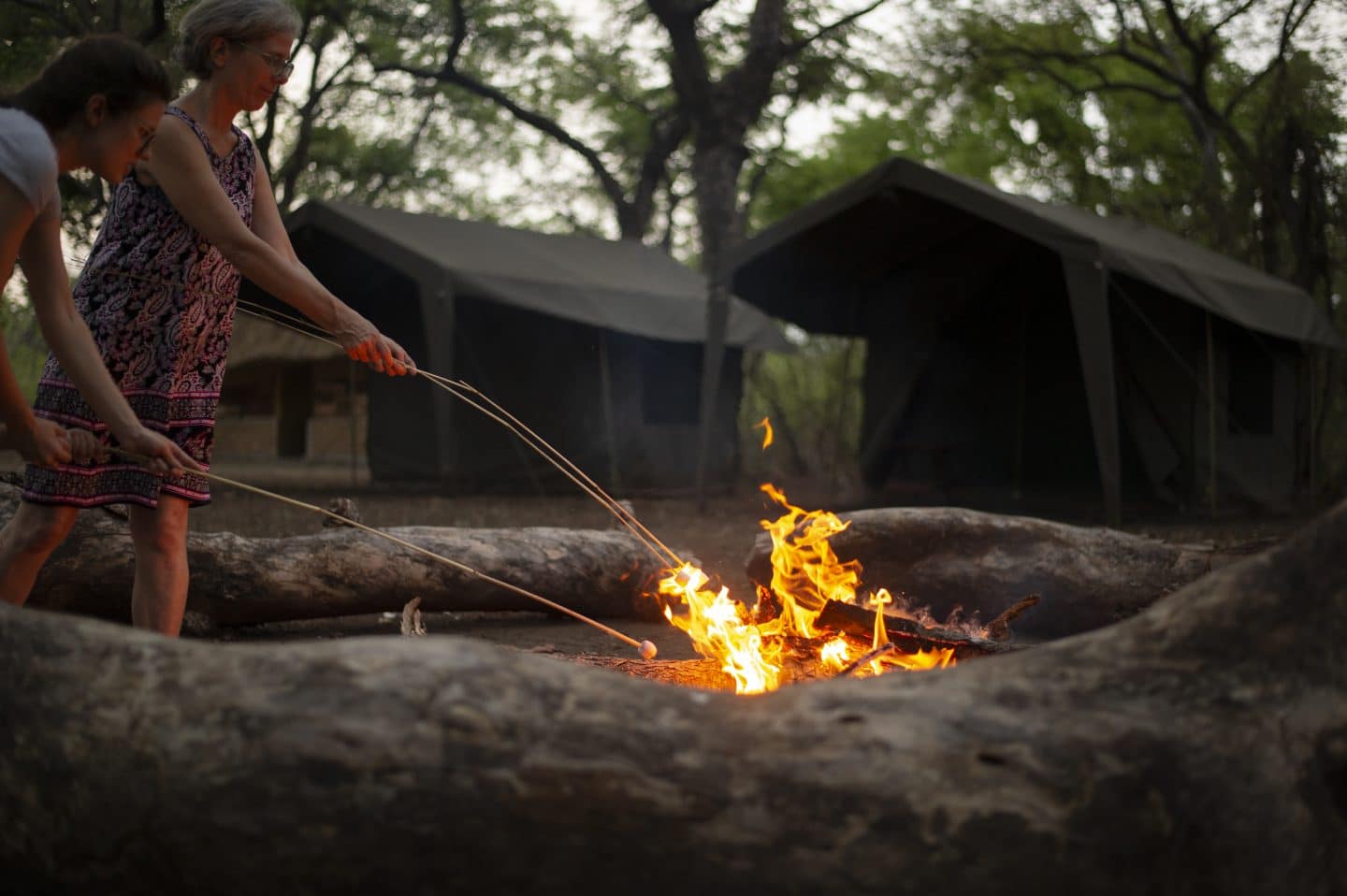
May, June and September are some of the best months to visit Malawi. By June the rains have ended, the landscape is still green, temperatures are comfortable (18–25°C by day), and all activities safari, hiking, and community projects are fully accessible. It’s the start of peak season, so book ahead, but it’s not crowded in the way larger destinations in Africa can be.
July is Malawi’s coolest month with clear blue skies, no rain, and daytime temperatures in the low twenties. It can be cold at night, particularly around Fisherman’s Rest and in the Mountains if you fancy hiking, so pack warm layers for evenings. August warms up slightly, with days reaching 22–27°C, and lends itself to warmer weather activities like watersports on Lake Malawi.
Not particularly, which is one of June’s great advantages for visitors. Daytime temperatures in Blantyre Rural sit between 18°C and 25°C: warm enough to be comfortable outside all day, cool enough to work, walk and be out and about all day without the heat becoming an issue. Evenings are cool, sometimes cold, around the fire. If you want to visit when it’s warmer, then aim to book in September. October and November can reach into the late 30 degrees centigrade, which requires afternoon down time!
Malawi is consistently rated as one of the most peaceful countries in Africa. Travelling with an experienced local operator, like Fisherman’s Rest, means your safety is managed throughout, from airport collection to daily itinerary. For families in particular, having that full-trip hosting is the difference between managing the logistics yourself and being fully present in the experience with your family.
Rates at most lodges are lower during the wet season (November to April). If budget is a significant factor and you have flexibility, March to May is great, as the rains tail off and the landscape recovers. Get in touch with us to discuss options.
There’s something about Malawi that’s hard to fully describe until you’ve been here. The air is clean in a way it isn’t anywhere else. The light is extraordinary. The communities are busy, the Madzi Alipo team out in the field, children at Tilitonse, farmers tending their nurseries. And you can walk into all of it as a working part of development and change.
If you’re thinking about when to come, and you want a temperate climate with good Safari opportunities then June, July, August, September are your months. And Fisherman’s Rest will be here, ready to welcome you properly.
To keep up to date on all Fisherman’s Rest news, including new trips, project work and good news stories, join our mailing list.
When booking a trip with us, you create an account. The login details you created when doing so will gain you access to our Trip Portal. If you still have issues gaining access, head over to the Login page and click Lost Your Password?